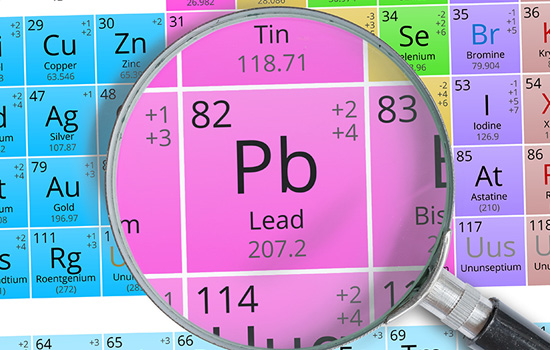
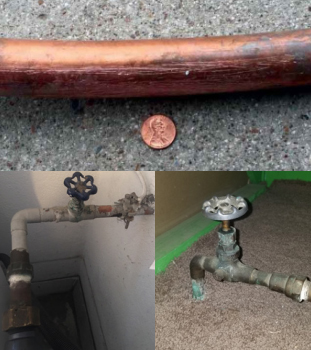
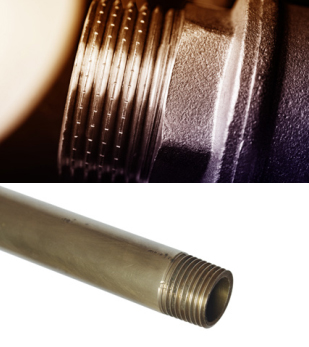
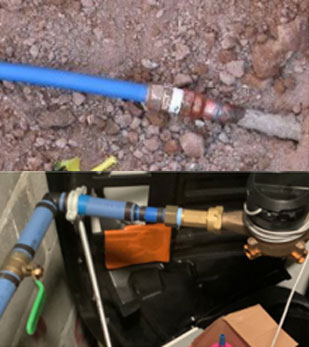
Lead is rarely—if ever—found naturally in Aquarion’s water sources or in the treated water flowing through our distribution system. More commonly, lead may leach into water over time through corrosion: the dissolving or wearing away of metal caused by a chemical reaction between water and some plumbing systems. Lead can leach into water from pipes, solder, fixtures, faucets (brass), and fittings. The amount of lead that may enter your water depends on the types and amounts of minerals in the water, how long the water stays in the pipes, how corrosive the water is, and the water’s temperature.
The most common plumbing components that may contribute to lead in your water are as follows:
Lead Service Lines
Despite the quality of our water sources and the effectiveness of our treatment process, lead can get into a home’s drinking water through lead service lines or through home plumbing systems that have lead. With a few exceptions, most lead service lines were installed in homes built before 1930. In 1986, lead pipes were banned in the United States and plumbing materials were required to meet federal “lead-free” specifications. There is a possibility that plumbers used leftover stock of lead supplies during work between 1986 and 1988. So, people in homes built before 1988 are at higher risk. If you are concerned about your home’s plumbing or service line, a certified plumber can inspect your service line, pipes, solder, and fittings for lead.
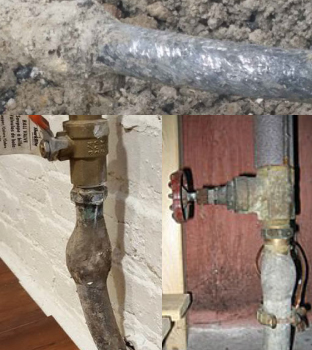
Lead service lines often can be seen where they enter the home's foundation. They are dull grey and if scratched (with a flathead screwdriver or coin) it will scratch easily and reveal a shiny surface.
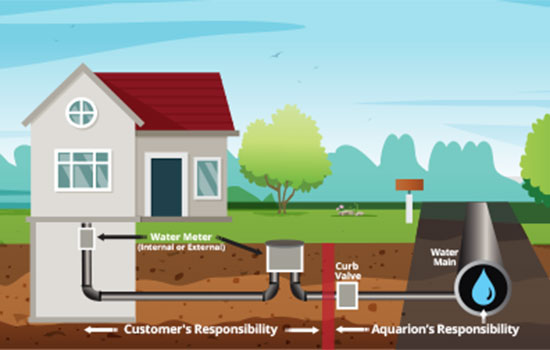
Homeowners are responsible for the service lines on their property. So, if your plumber finds a lead service line, please take steps to replace it, and be sure to let us know so we can update our records and complete work of the remaining portion of the line.
Galvanized Pipe
Some older homes have service lines and/or plumbing systems made of galvanized iron piping.
- Galvanized pipes are made of iron or steel and coated with zinc as a layer of protection for the pipe.
- Over time, galvanized service lines can collect lead released from an upstream lead source (such as a service line or “gooseneck” connector to the main).
- The zinc coating on galvanized pipes may also have lead that can corrode and leach into the drinking water.
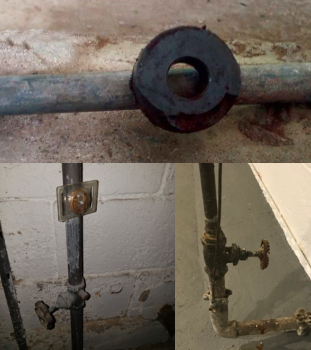
You can identify galvanized pipes by using a strong magnet, which will stick to the surface of the pipe. A scratch test with a screwdriver or nail will not disturb the surface as much and will remain dull gray. If your home has galvanized iron piping and was fed by a lead service line at any time (including currently), then you are at risk of lead being released into your water. We encourage you to have your water tested and your galvanized line replaced.