EPA PFAS Proposed Regulation
On March 15, 2023 the US EPA proposed a National Primary Drinking Water Regulation (NPDWR) for 6 of the following PFAS Compounds: Perfluorooctanoic acid (PFOA), Perfluorooctane sulfonic acid (PFOS), Perfluorononoctanoic acid (PFNA), Perfluorohexane sulfonic acid (PFHxS), Perfluorobutane sulfonic acid (PFBS), and Hexafluoropropylene oxide dimer acid (HFPO-DA, aka GenX Chemicals). Aquarion is continuing our compliance PFAS testing program in each of our water systems to ensure our customers receive the highest quality water achievable. This proposed rule does not require action until it is finalized at the end of 2023, however, Aquarion will proactively be working to meet the proposed NPDWR.
Below are the proposed Maximum Contaminant Levels (MCLs):
- PFOA – 4 ppt*
- PFOS – 4 ppt*
- PFNA, PFHxS, PFBS, and HFPO-DA – 1.0 Hazard Index (unitless)
* ppt – parts per trillion
Until the US EPA finalizes the PFAS NPDWR Aquarion will continue to observe the below Massachusetts Department of Environmental Protection (Mass DEP) regulations.
Massachusetts PFAS Regulation
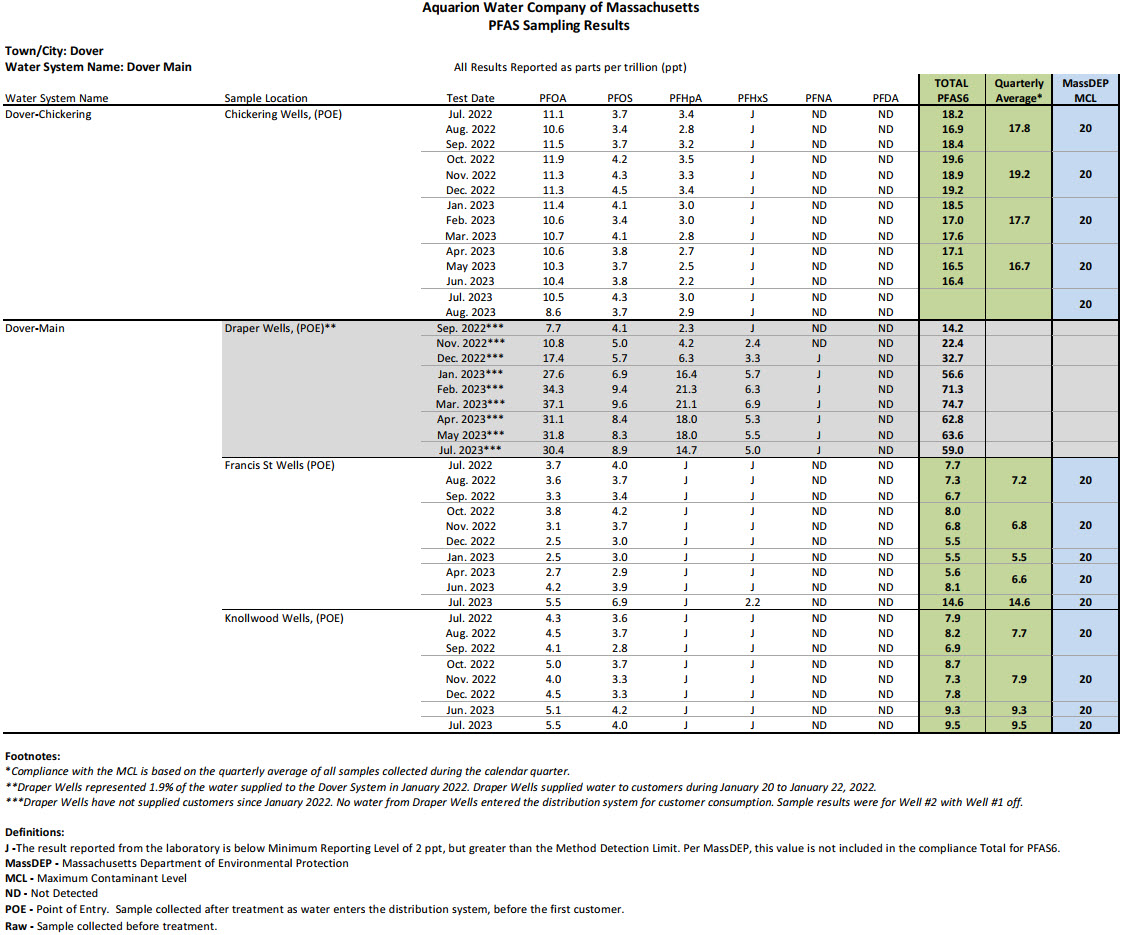
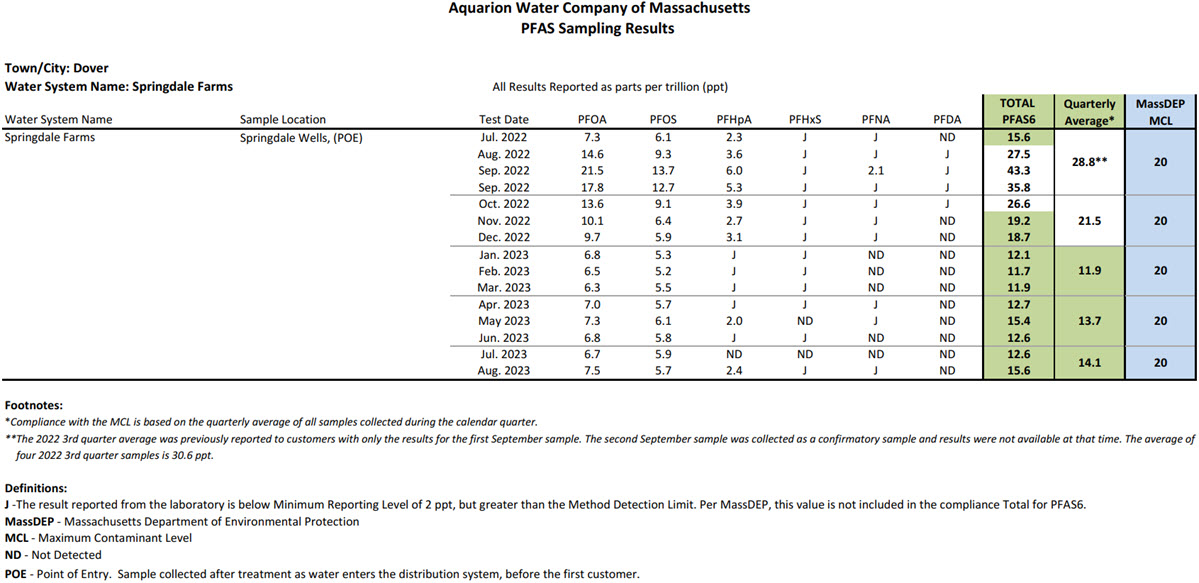
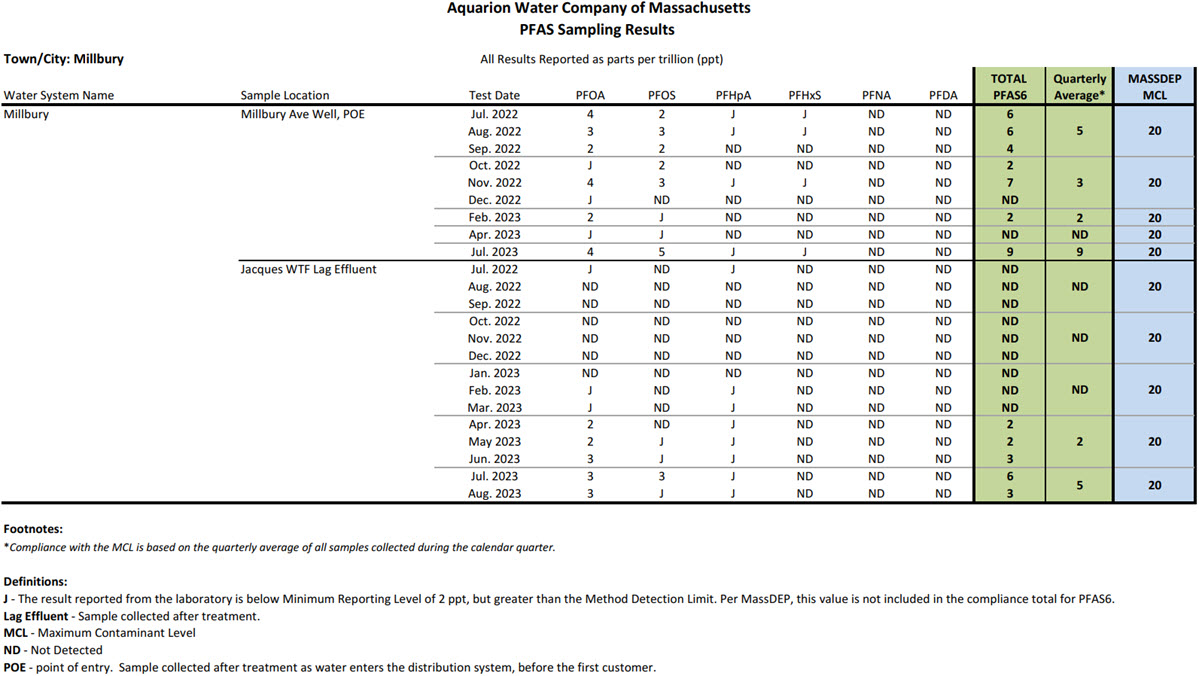
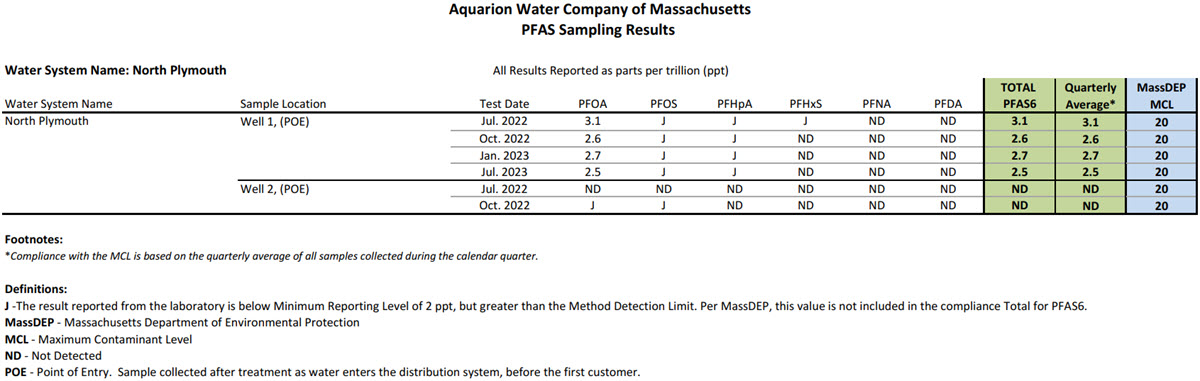
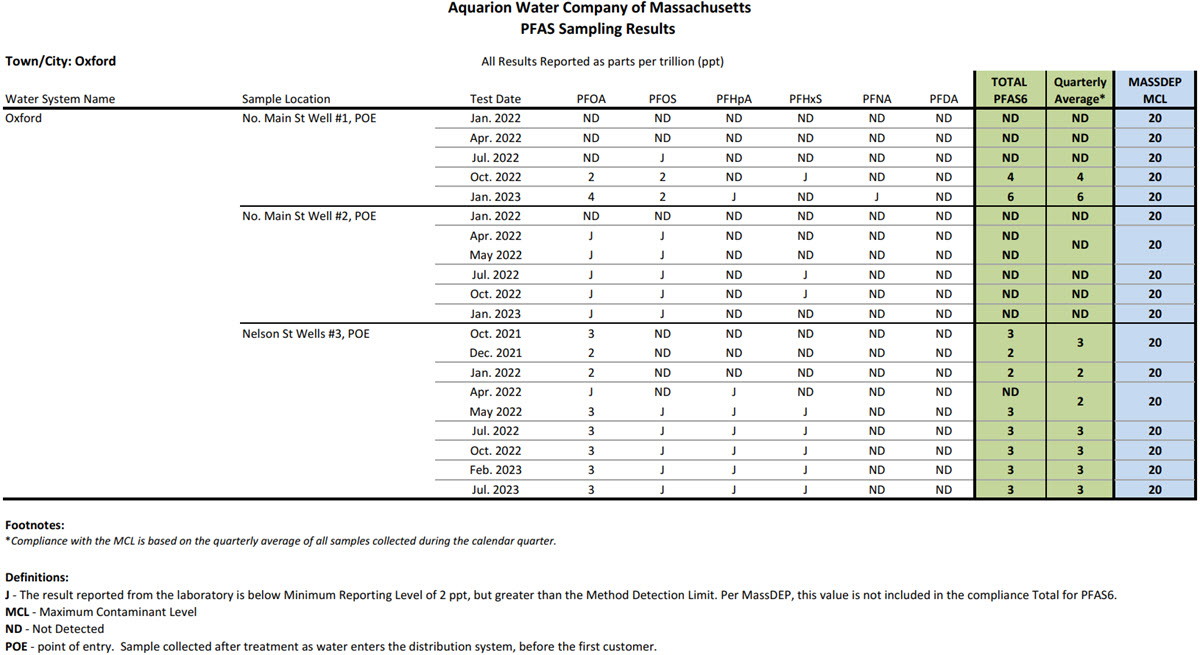
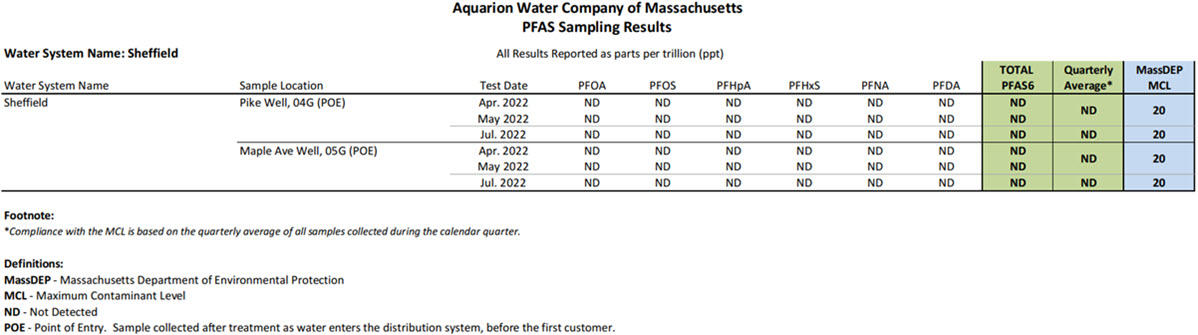
On October 2, 2020, a new enforceable water quality regulation for PFAS chemicals in public drinking water was established by the Mass DEP. The regulation provides a stringent Maximum Contaminant Level (MCL) water quality standard of 20 parts per trillion (ppt) for the sum of six PFAS chemicals, and also includes monitoring, reporting, and public notification requirements. Drinking water containing a total of 20 ppt or less of the six regulated PFAS chemicals is deemed safe to drink. If drinking water is found to contain more than 20 ppt of these PFAS chemicals, then the water supplier must work with Mass DEP to lower the PFAS level in order to achieve compliance with the standard.