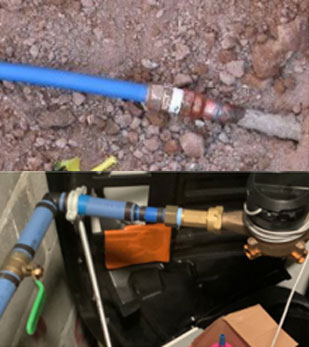
Learn About Lead

What-Is-Lead

What is lead?

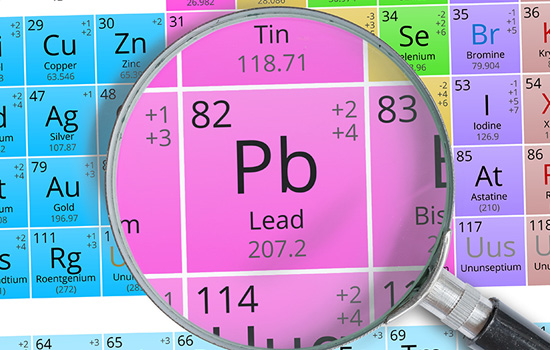
Lead is a naturally occurring metal harmful to our health. It can be in air, soil, dust, food, and water. Lead was commonly used in gasoline and paint until the 1970s. It is still sometimes found in products such as ceramics, batteries, ammunition, and cosmetics. Lead was also used for centuries in plumbing because does not rust, crack or leak like other metals. In fact, lead’s chemical symbol, Pb, is from the Latin word for plumbing.

Where is lead found?

Although the U.S. Congress took steps to limit lead in pipes in 1986 and again in 2014, lead may still be in a home’s plumbing and fixtures. Lead in plumbing can contribute to lead in drinking water by slowly dissolving into the water it comes in contact with, or breaking off in tiny pieces as the water flows through in a process called corrosion.

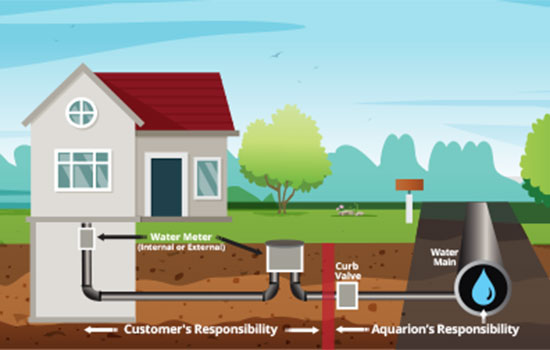
There is no lead in the water that leaves the Aquarion treatment plant, or the large underground pipes it runs through to reach customers, called water mains. But, lead can enter your tap water through a service line, which is the line that brings water from the main to your house, and also from the pipes, plumbing and faucets inside your home.

Aquarion consistently complies with Federal and State water quality standards, including those for lead. In some systems, Aquarion also adjusts the water’s chemistry to prevent corrosion that may result in lead at the tap. Each year, we report to customers the levels of lead and many other potentially hazardous substances that may be in water systems.


Lead Service Line Inventory map

Lead Service Line Inventory

water pouring into glass

Minimize Your Exposure to Lead

diagram of service line ownership

Who Owns What?

over the shoulder view of a senior woman reading an Aquarion service line letter

Understanding your Aquarion service line letter

Aquarion is sending letters to customers about the materials of their water service lines as part of the U.S. Environmental Protection Agency’s (EPA) Lead and Copper Rule Revisions (LCRR), to promote transparency and safety. Receiving a letter DOES NOT mean there is lead in your drinking water. The letters aim to educate and gather information about your service line. Learn why you received a letter, what it means, and the next steps you can take.


Lead regulations

The U.S. Environmental Protection Agency’s Lead and Copper Rule (LCR) requires water systems test for lead and copper at the tap in certain homes. The tests focus on homes with lead service lines, which are expected to have higher lead concentrations.

Lead samples are required to be “first-draw samples,” or a sample taken from tap water that has stood motionless in the plumbing pipes for at least six hours. Water systems, like Aquarion, compare sample results from these homes to an action level (AL) of 0.015 milligrams per liter (mg/L), also known as 15 parts per billion. If 10 percent of the samples from these homes have lead above the 15 parts per billion (ppb) action level, then the systems must conduct public education, corrosion control treatment modification, and lead service line replacement if applicable.

Aquarion conducts many other water quality tests to comply with U.S. Environmental Protection Agency (EPA) regulatory requirements. To learn more about water quality in your area, read our Water Quality Reports.

Understanding the Lead and Copper Rule Revisions (LCRR)

As of October 2024, the EPA’s Lead and Copper Rule Revisions (LCRR) are in effect. Aquarion has taken steps to meet these requirements, which include:

  • A public inventory of lead service lines (LSLs): Water systems must identify the locations of all known lead service lines. They must document the “lead status” of all other lines, such as unknown, not-lead, or galvanized service line. Customers can help Aquarion determine the material of their water service line by completing our Service Line Survey.
  • Notification to customers with lead, unknown, or galvanized service lines: Water systems must provide educational resources to customers to help them minimize their exposure to lead. Aquarion customers can learn more by visiting our Minimize Your Exposure to Lead page.

Guide to identifying your service line material

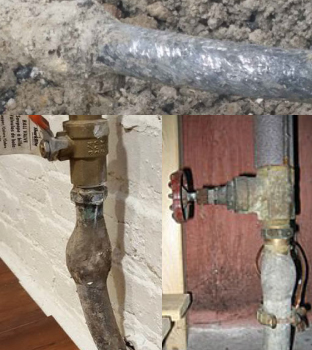
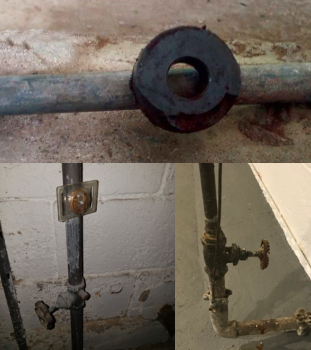
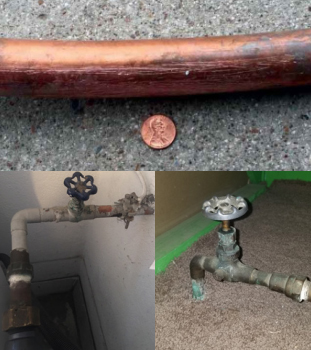
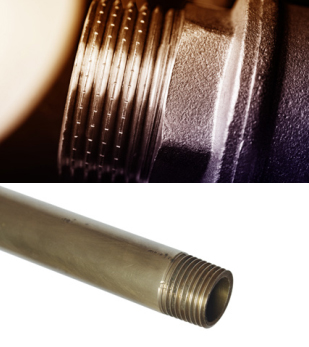
Below, you’ll find a visual and descriptive guide to help you identify common pipe materials. From lead to plastic, learn the characteristics of each type and how to easily recognize them through simple tests and visual cues. Follow the steps below to learn how to identify your service line material:

  1. Find where the water comes into your building. This is usually in the basement!
  2. Observe the color of the pipe coming into your building.
  3. Perform a scratch test by gently scratching the pipe with a coin or a flathead screwdriver. Observe the scratch!
  4. Grab a magnet from your refrigerator and see if it sticks to the pipe.
  5. Now use the key below to match your characteristics.
lead service line

Lead

galvanized steel service line

Galvanized Steel

copper service line

Copper

brass service line

Brass

plastic service line

Plastic


Exception occurred while executing the ViewComponent: SitefinityContentList. Actual error: No dynamic field with the value of FeaturedImage was found in the object


Monitoring,-Treatment

Monitoring, Treatment & Distribution

Aquarion performs over 175,000 tests of its water annually.